Slow FIRE: The Sustainable Path to Financial Freedom
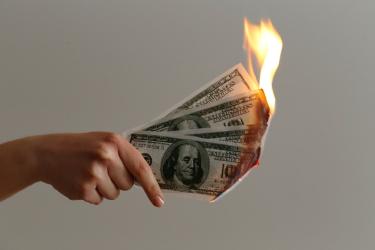
The FIRE movement has spent the past decade convincing people that extreme frugality and aggressive saving rates of 50-70% are the only paths to early retirement. For some, that works - for most? It leads to burnout, resentment, and eventually abandoning financial goals altogether.
Enter Slow FIRE-a philosophy gaining traction among those who want financial independence without sacrificing their present for an uncertain future.
What Slow FIRE Actually Means
Slow FIRE rejects the sprint mentality. Instead of racing toward a retirement date, practitioners aim for gradual wealth accumulation while maintaining quality of life throughout the journey.
The math differs substantially from traditional FIRE. Where aggressive savers target 25 times annual expenses (the classic 4% rule), Slow FIRE adherents often work with:
- Savings rates between 20-35% of income
- A 15-25 year timeline rather than 5-10 years
- Intentional spending on experiences and relationships
- Career satisfaction as a priority, not just income maximization
A 2023 study from Fidelity Investments found that 78% of Americans who attempted extreme saving rates abandoned their plans within three years. The dropout rate for moderate savers? Just 23%.
The Psychology Behind Sustainable Saving
Research from behavioral economist Shlomo Benartzi demonstrates that financial habits function like muscles-they need progressive training rather than immediate overload. His work at UCLA found that people who increased savings rates by 1-2% annually maintained those habits at rates 340% higher than those who attempted dramatic overnight changes.
There’s also the hedonic adaptation problem. Aggressive FIRE practitioners often discover that the happiness boost from early retirement fades within 18 months. Meanwhile, they’ve spent years living below their means, deferring relationships, skipping travel, and declining social opportunities.
Slow FIRE flips this equation. The approach acknowledges that financial security matters, but so does enjoying the decades between now and retirement.
Practical use Strategies
The Baseline Budget Method
Rather than calculating the minimum possible spending, Slow FIRE practitioners establish a “baseline budget” that includes genuine quality-of-life expenses. This typically covers:
- Housing that doesn’t require excessive commuting
- Food that nourishes without requiring hours of meal prep
- Regular social activities and modest travel
- Professional development and education.Health and fitness investments
From this baseline, savings targets emerge organically. A household earning $150,000 annually might set a baseline of $85,000, creating a 30% savings rate after taxes-aggressive by conventional standards, sustainable by lived experience.
Income Growth as a Tool
Traditional FIRE obsesses over expense reduction. Slow FIRE places equal emphasis on income growth.
The reasoning is mathematical. Cutting $500 from monthly expenses provides $500 in savings. But earning an additional $500 while maintaining current spending also provides $500-without the lifestyle sacrifice.
Career development, strategic job changes, side income, and skill acquisition all factor into the Slow FIRE equation. A 2024 analysis from compensation research firm Payscale found. Workers who changed jobs every 3-4 years earned 50% more over a 15-year period than those who stayed with single employers.
Flexible Retirement Definitions
Slow FIRE adherents often reject full retirement as the end goal. Instead, many plan for:
- Part-time work in enjoyable fields
- Consulting or freelance arrangements
- Phased retirement over several years
- “Barista FIRE”-working low-stress jobs for benefits and social connection
This flexibility reduces the required nest egg substantially. Someone planning to earn $20,000 annually in semi-retirement needs roughly $500,000 less in savings than a full retiree with identical expenses.
Investment Approaches for the Long Game
With extended timelines, Slow FIRE investors can afford different risk profiles than their aggressive counterparts.
The traditional FIRE community often recommends 100% equity allocation during accumulation phases. Slow FIRE practitioners typically maintain more balanced portfolios-70-80% equities with bond and alternative allocations providing stability.
This matters psychologically. Market downturns of 30-40% test even experienced investors. Those on 20-year timelines can weather volatility better than those counting on a specific early retirement date.
Vanguard research from 2024 indicates that investors with moderate asset allocations were 67% more likely to maintain their investment plans during market corrections compared to aggressive investors.
Real Estate Considerations
Slow FIRE strategies often incorporate real estate differently than traditional approaches. Rather than viewing homeownership purely as expense reduction, practitioners consider:
- Rental property income as part of retirement planning
- House hacking during accumulation years
- Geographic arbitrage-relocating to lower-cost areas gradually
- Home equity as a retirement backup rather than primary strategy
Common Criticisms and Counterarguments
Skeptics argue that Slow FIRE is just ordinary retirement planning with better marketing. There’s some truth here. The 25-year accumulation timeline isn’t dramatically different from conventional financial advice.
But framing matters. The FIRE movement created urgency and community around wealth building. Slow FIRE maintains that community while promoting sustainability.
Others contend that extended timelines expose investors to more risk-job loss, health issues, economic downturns. This criticism has merit. The counterargument: aggressive savers face identical risks with less financial cushion and fewer enjoyable memories to show for their sacrifice.
Who Benefits Most From This Approach
Slow FIRE works particularly well for:
**Parents with young children. ** The extreme saving rates of traditional FIRE often conflict with childcare costs, education savings, and time availability. Slow FIRE accommodates family building without abandoning financial goals.
**Mid-career professionals. ** Those discovering FIRE in their 40s may find 10-year timelines unrealistic. A 20-year plan allows genuine progress without dramatic lifestyle upheaval.
**People who actually enjoy their work. ** Not everyone dreams of early retirement. Some want financial security and career flexibility without walking away from fulfilling careers.
**Those recovering from financial setbacks. ** Debt repayment, divorce, or career disruption can make aggressive saving impossible. Slow FIRE provides a path forward without requiring perfection.
The Numbers in Practice
Consider a 35-year-old earning $100,000 annually. Under traditional FIRE assumptions (60% savings rate, 7% returns), retirement at 45 becomes achievable with approximately $1. 2 million in investments.
The same person following Slow FIRE principles (30% savings rate, identical returns) reaches $1. 2 million at age 52-seven years later, but with an additional $30,000 annually available for living expenses during those 17 years of saving.
That’s $510,000 in additional spending capacity. Enough for family vacations, comfortable housing, quality food, and regular entertainment.
The trade-off is explicit: seven more years of work in exchange for nearly two decades of balanced living.
Getting Started
Transitioning to Slow FIRE requires honest self-assessment. Key questions include:
- What savings rate can I maintain indefinitely without resentment? - Which expenses genuinely improve my life versus those I could eliminate painlessly? - How might my income change over the next decade with intentional career development? - What does my ideal semi-retirement look like?
Tracking spending for 3-6 months before setting targets helps establish realistic baselines. Many discover they’re already saving adequately-they just lack the framework to recognize it.
The Slow FIRE community continues growing through forums, podcasts, and local meetups. Resources like the ChooseFI podcast have dedicated episodes to sustainable approaches, and the personal finance subreddit hosts active discussions comparing methodologies.
Financial independence remains the goal. The journey just doesn’t need to feel like punishment.