The Real Cost of Lifestyle Inflation Over Time
The Real Cost of Lifestyle Inflation Over Time
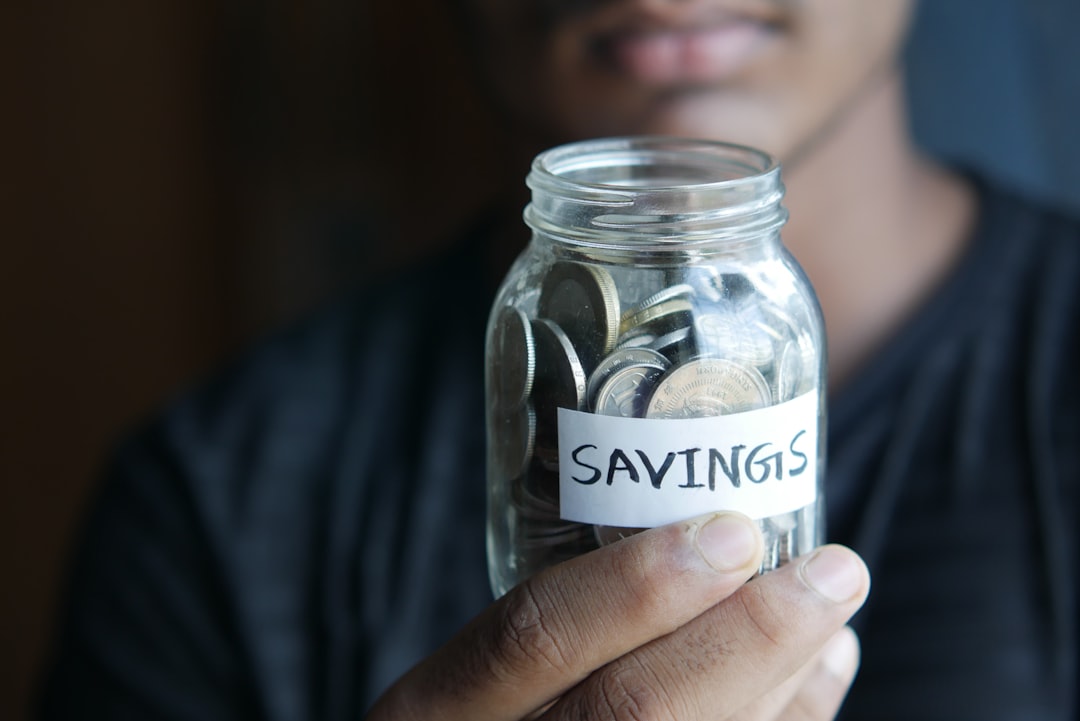
A software engineer lands her first job at $65,000 per year. Five years later, she’s earning $120,000. Her savings account - still hovering around $8,000. The raises came - the wealth didn’t.
This pattern plays out across income brackets and professions with alarming consistency. Lifestyle inflation-the tendency to increase spending as income rises-represents one of the most significant yet underappreciated threats to long-term wealth accumulation.
What Lifestyle Inflation Actually Looks Like
Lifestyle inflation rarely announces itself. Nobody wakes up deciding to sabotage their financial future. Instead, it creeps in through seemingly reasonable upgrades.
The $1,200 apartment becomes a $2,100 apartment because “I can afford it now. " The Honda Civic gets traded for a BMW 3-Series. Business class replaces economy on vacation flights. The $50 dinner budget stretches to $150 because work stress “deserves” compensation.
Research from the Bureau of Labor Statistics reveals that households earning between $100,000 and $149,999 spend 93% of their after-tax income on average. Those earning $70,000 to $99,999 - they spend 91%. Higher earners aren’t necessarily building wealth faster-they’re just spending more elaborately.
Dr. Thomas Stanley’s research in “The Millionaire Next Door” documented this phenomenon decades ago. His findings showed that many high-income professionals-doctors, lawyers, executives-accumulated less wealth than middle-income business owners and teachers. The difference came down to consumption patterns, not earning power.
The Mathematics of Spending Creep
Here’s where lifestyle inflation gets expensive. Consider two scenarios involving identical $20,000 annual raises.
Scenario A: Sarah receives a raise from $80,000 to $100,000. She increases her spending by $15,000 annually-a nicer apartment, upgraded car, more frequent dining out. Her savings increase by $5,000 per year.
Scenario B: Michael gets the same raise. He keeps his lifestyle roughly constant, adding only $3,000 in annual spending. His savings increase by $17,000 per year.
After ten years with 7% average investment returns, Sarah’s additional savings grow to approximately $69,000. Michael’s grow to roughly $235,000.
The gap exceeds $165,000 - from identical raises.
But the compounding extends further. That $165,000 difference, left invested for another twenty years at 7%, becomes over $638,000. One decade of lifestyle inflation decisions created a retirement shortfall approaching three-quarters of a million dollars.
These calculations don’t account for the hedonic treadmill effect-the psychological reality that spending increases rarely produce lasting satisfaction improvements. A 2010 Princeton study by Daniel Kahneman and Angus Deaton found that emotional well-being plateaus around $75,000 in household income (approximately $95,000 adjusted for 2024 inflation). Spending beyond basic comfort and security generates diminishing happiness returns.
Why High Earners Often Retire Broke
The Employee Benefit Research Institute reports that 40% of households headed by someone aged 35-64 are projected to run short of money in retirement. This includes substantial numbers of households that earned six figures throughout their careers.
How does this happen?
Lifestyle inflation creates structural financial fragility. When spending expands to match income, any disruption-job loss, health crisis, industry downturn-triggers immediate financial stress. There’s no cushion. The surgeon earning $400,000 but spending $380,000 has less financial security than the teacher earning $55,000 and spending $40,000.
The phenomenon intensifies because lifestyle inflation is asymmetric. Upgrading feels natural and easy - downgrading feels like failure.
Social comparison accelerates the problem. As income rises, peer groups often shift toward higher earners. The new reference group sets new consumption expectations. A $50,000 car seems reasonable when colleagues drive $70,000 vehicles. The goalposts move continuously upward.
Financial advisors call this “wealth signaling versus wealth building. " Visible consumption-cars, homes, vacations, clothing-signals status but depletes capital. Actual wealth accumulation happens invisibly, in brokerage accounts and index funds that nobody sees at dinner parties.
Breaking the Pattern: Practical Approaches
Reversing lifestyle inflation requires intentional friction against automatic spending growth.
**Automate savings increases first. ** When income rises, increase automated savings transfers before adjusting discretionary budgets. A $10,000 raise could mean $6,000 more in retirement contributions and $4,000 in lifestyle upgrades-rather than the reverse.
**Calculate opportunity costs in future dollars. ** That $500 monthly car payment upgrade represents not $500 but approximately $1,500 per month in foregone retirement wealth (assuming 30 years of compounding at 7%). Framing decisions in future terms clarifies actual tradeoffs.
**Maintain deliberate friction. ** Some FIRE (Financial Independence, Retire Early) practitioners deliberately keep modest homes and older vehicles despite high incomes. The visual reminder reinforces spending discipline. Looking wealthy and becoming wealthy work at cross-purposes.
**Track spending ratios, not just amounts. ** Saving $20,000 annually sounds impressive until you realize it represents 10% of a $200,000 income. Percentage-based tracking reveals whether savings rates improve as income grows-or stagnate while spending absorbs all gains.
**Build lifestyle inflation awareness. ** Review spending categories from three years ago. Which increases genuinely improved quality of life? Which simply became new baselines that no longer register as upgrades? This exercise often reveals that much additional spending produced little additional satisfaction.
The FIRE Movement’s Core Insight
The financial independence community grasped something important: the savings rate matters more than the income level.
Someone saving 50% of a $100,000 income accumulates wealth faster than someone saving 10% of a $250,000 income. The math is straightforward, yet the behavior is rare.
Mr. Money Mustache, a prominent FIRE blogger, retired at 30 on a household income that never exceeded $130,000 combined. The strategy wasn’t high income-it was aggressive lifestyle inflation resistance from day one of his career.
This doesn’t require extreme frugality or deprivation. It requires conscious choices about which spending actually improves life versus which spending simply maintains social positioning.
What Actually Buys Happiness
Positive psychology research offers guidance on spending that generates lasting satisfaction:
**Experiences over possessions. ** Travel, skills, and shared activities produce more sustained happiness than material goods. A two-week hiking trip often generates more lasting satisfaction than a $15,000 watch.
**Time over money. ** Spending that buys back time-housecleaning, meal delivery, shorter commutes-correlates with higher well-being than status purchases.
**Autonomy over luxury. ** Financial runway-months of expenses in savings-provides psychological benefits that luxury goods cannot match. The security of options exceeds the pleasure of upgrades.
**Giving over getting. ** Research consistently shows that prosocial spending produces more happiness than self-directed consumption.
Strategic spending aligned with these principles can be generous without triggering wealth-eroding lifestyle inflation. The problem isn’t spending itself-it’s unconscious spending that expands automatically without corresponding life improvements.
The Long Game
Lifestyle inflation extracts its toll slowly. Nobody notices the missing $500,000 in their 40s because it won’t materialize until their 60s. The cost remains invisible until retirement approaches and the math becomes unavoidable.
But the inverse is equally true. Every year of spending discipline compounds. Every raise partially captured for investment grows silently in the background.
The choice isn’t between enjoying life now and building wealth for later. It’s between conscious spending that actually improves life versus unconscious spending that simply expands to fill available income.
The software engineer from the opening example? She could still build substantial wealth. But every year of continued lifestyle inflation makes the path harder. The best time to address spending creep was five years ago. That second best time is now.