Protecting Your Investments During Tariff Uncertainty
Protecting Your Investments During Tariff Uncertainty
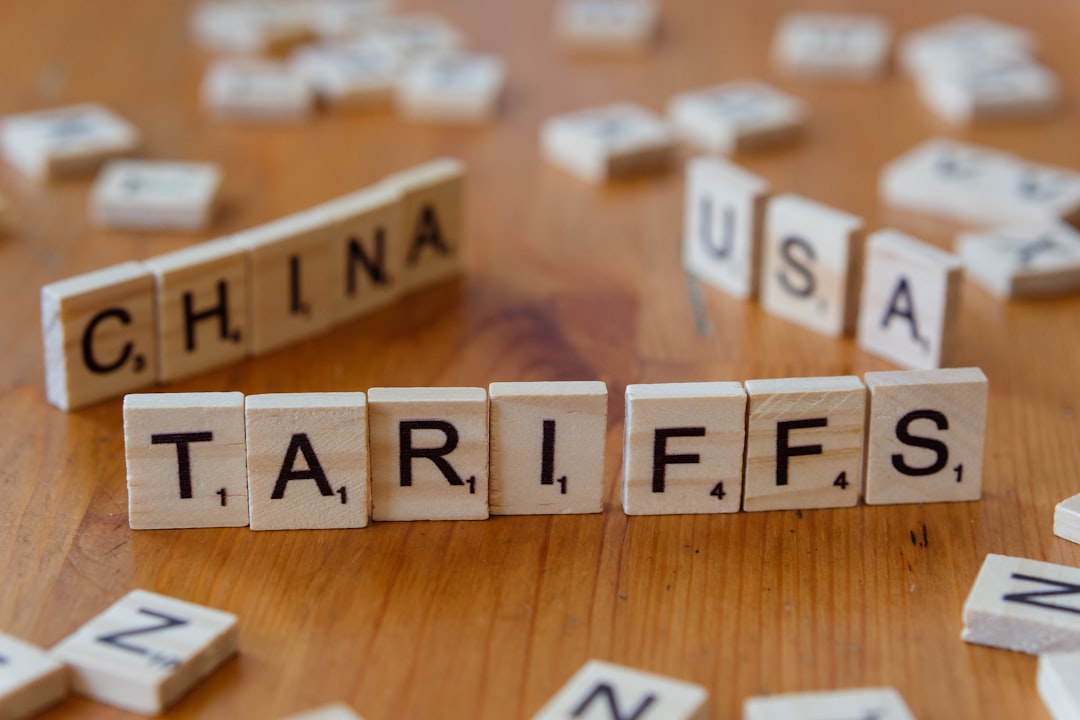
Trade policy shifts can wipe out months of portfolio gains in a single afternoon. The 2018-2019 U - s. -China trade war demonstrated this brutally-the S&P 500 dropped 6. 6% in May 2019 alone when tariff negotiations collapsed. For investors focused on long-term wealth building and financial independence, understanding how to position portfolios against geopolitical risk isn’t optional anymore.
It’s essential.
Why Tariffs Create Outsized Market Reactions
Markets hate uncertainty more than bad news. A 25% tariff on imported goods creates calculable costs. But the threat of tariffs-or their sudden removal-generates the kind of volatility that damages portfolios.
Consider what happened in December 2018. The Federal Reserve had already spooked markets with rate hike signals. Then tariff escalation fears piled on. The result - a 19. 8% peak-to-trough decline in the S&P 500 over roughly three months.
Three mechanisms drive tariff-related volatility:
**Supply chain disruption. ** Companies with complex global supply chains face immediate margin pressure. Apple, for example, saw its stock drop 39% from October 2018 to January 2019 partly due to China exposure concerns.
**Retaliatory spirals. ** One country’s tariff becomes another’s political mandate to respond. Agricultural exporters learned this the hard way when China targeted soybeans specifically to pressure U. S - farm states. Soybean futures dropped 18% in 2018.
**Consumer price transmission. ** Tariffs function as consumption taxes. When import costs rise, either corporate margins shrink or consumer prices increase. Neither outcome supports equity valuations.
Portfolio Protection Strategies That Actually Work
Generic advice to “diversify” misses the point. Diversification across correlated assets provides false comfort. During the March 2020 COVID crash, correlations spiked to 0. 85+ across most equity classes. The same pattern emerges during tariff shocks.
Here’s what research and historical data suggest works better:
Geographic Diversification With Intent
Owning international stocks isn’t enough - the specific composition matters enormously.
During the 2018-2019 trade tensions, emerging markets with significant U. S - trade exposure underperformed dramatically. The MSCI Emerging Markets Index fell 16. 6% in 2018. But countries with limited direct U. S. trade exposure-India, Indonesia, parts of Latin America-showed more resilience.
Practical application: examine your international holdings for actual trade exposure, not just geographic labels. A “European” fund heavy in German exporters carries different tariff risk than one focused on domestic-oriented Spanish utilities.
Sector Rotation Based on Tariff Sensitivity
Not all sectors respond equally to trade policy shifts.
A 2019 Federal Reserve study found that tariff announcements had statistically significant negative effects on:
- Industrials (-1. 2% average announcement-day return)
- Materials (-0. 9%)
- Technology (-0.
Meanwhile, utilities, healthcare, and real estate showed near-zero sensitivity to tariff news. These sectors derive revenue domestically and face minimal import cost pressures.
During periods of elevated tariff risk, tilting toward defensive sectors provides measurable protection. This isn’t about abandoning growth stocks entirely. It’s about marginal reallocation-perhaps shifting 10-15% of equity exposure toward tariff-resistant sectors.
Treasury Bonds as Crisis Hedges
The flight-to-safety trade remains reliable during geopolitical stress. Long-duration Treasury bonds gained 14. 8% in 2019 while trade war headlines dominated news cycles.
But here’s where many investors get this wrong: short-term Treasuries don’t provide the same hedge. You need duration exposure-10-year or longer maturities-to capture the full flight-to-safety effect. A portfolio allocation of 15-25% to long Treasuries historically reduces drawdowns during tariff-related corrections by 30-40%.
Gold and Commodities: Selective Use Only
Gold’s reputation as a crisis hedge deserves scrutiny. During the 2018 tariff escalation, gold actually fell 6% before recovering. It works better as an inflation hedge than a volatility hedge.
That said, gold did rally 18% in 2019 as trade tensions persisted. The relationship is complex: acute shocks don’t immediately boost gold, but prolonged uncertainty does.
A small allocation (5-10%) makes sense for investors concerned about extended tariff conflicts. Larger allocations create drag during normal market conditions.
The FIRE Investor’s Specific Challenges
Investors pursuing financial independence face unique tariff-related risks.
**Sequence of returns risk intensifies. ** A 20% portfolio decline matters more in the five years before and after retirement than at any other time. Tariff shocks occurring during this window can delay FIRE timelines by years. A portfolio worth $1 million that drops to $800,000 needs a 25% gain just to recover-potentially requiring 2-3 additional working years.
**Safe withdrawal rate assumptions need stress testing. ** The 4% rule assumes historical market returns that include periods of relative trade stability. Extended trade wars could compress returns for years, making 4% withdrawals unsustainable.
**Geographic arbitrage complicates matters. ** Many FIRE practitioners plan to relocate internationally to reduce living costs. Tariffs that strengthen the dollar (a common short-term effect) help these plans. But tariffs that eventually weaken American competitiveness could erode purchasing power abroad.
Building a Tariff-Resistant Investment Framework
Rather than reactive trading around headlines, consider building structural resilience into portfolio construction:
**Maintain higher cash reserves during elevated uncertainty periods. ** Cash serves two purposes: reducing volatility and providing dry powder for opportunistic buying. The Trade Policy Uncertainty Index, published by researchers at Stanford and the University of Chicago, provides a quantitative measure of tariff risk. When this index exceeds historical averages by more than one standard deviation, increasing cash from typical 5% to 10-15% makes sense.
**Use options strategically, not speculatively. ** Put options on broad indices provide explicit downside protection. The cost-typically 2-4% annually for at-the-money protection-represents insurance against tail risks. This isn’t about market timing. It’s about paying a known premium to cap potential losses.
**Focus on company-level fundamentals. ** Within equity allocations, favor companies with:
- Domestic revenue concentration (>70% U. S.
What Not to Do
Some common responses to tariff uncertainty destroy more value than they preserve.
**Panic selling after announcements. ** Research from Dalbar consistently shows that investor returns lag fund returns by 1-2% annually due to poor timing decisions. Selling after tariff headlines guarantees locking in losses.
**Overconcentrating in “safe” assets. ** Moving entirely to cash or bonds eliminates downside but also eliminates upside. Tariff situations resolve - markets recover. Missing the recovery creates permanent opportunity cost.
**Attempting to trade the news. ** Tariff announcements come via Twitter, press conferences, and leaked reports at unpredictable times. By the time retail investors react, institutional algorithms have already moved prices.
Looking Forward
Tariff uncertainty isn’t temporary. The post-WWII consensus around free trade has fractured. Both major U - s. political parties now include tariff advocates. Similar trends exist in Europe and Asia.
For long-term investors, this means incorporating geopolitical risk into baseline assumptions rather than treating it as an aberration. Portfolios designed for a free-trade world need updating.
The good news? Investors who build tariff-resistant portfolios now won’t need to scramble when the next trade conflict emerges. And given current global tensions, that emergence seems less a question of “if” than “when.
Prepare accordingly.